

Late the other night, I’m sitting there watching my television.
That’s right, television. Not my iPad, not my iPhone, not Facebook, not any other social media. Not even “the Internet on my television.” Just a show on my television.
And what ad starts to run?
Ads relating to trading the stock market. Ads about software to help do the very things I’ve been doing lately every trading morning before I get ready for work. Tools to make this work better; tools to make that work better; tools to help me trade better.
But how does the television know that I’m a day trader? It’s like all of a sudden marketers know more about me than I know about me.
Seriously, though, my television?!
How It Works — The Invisible Integration
Think about it. The majority of us have our “television” delivered to us via the Internet. In my case, I signed up for Internet services and also for “television”. I went on from there to sign up via the television with Netflix, AppleTV, Prime, and a few others. (Yeah. My bills are outrageous. And to make it sting even more, we don’t watch that much TV.)
Now all this “television” is routed through our connection to the outside world.
And what is that? Our Internet connection. The same one we use to surf the web. The one we use to search for things on Google, or Amazon, or YouTube. On my computer. On my iPad. On my iPhone. Because all these connect automatically to my home wireless network when I’m at the house.
And all of these share one IP address.
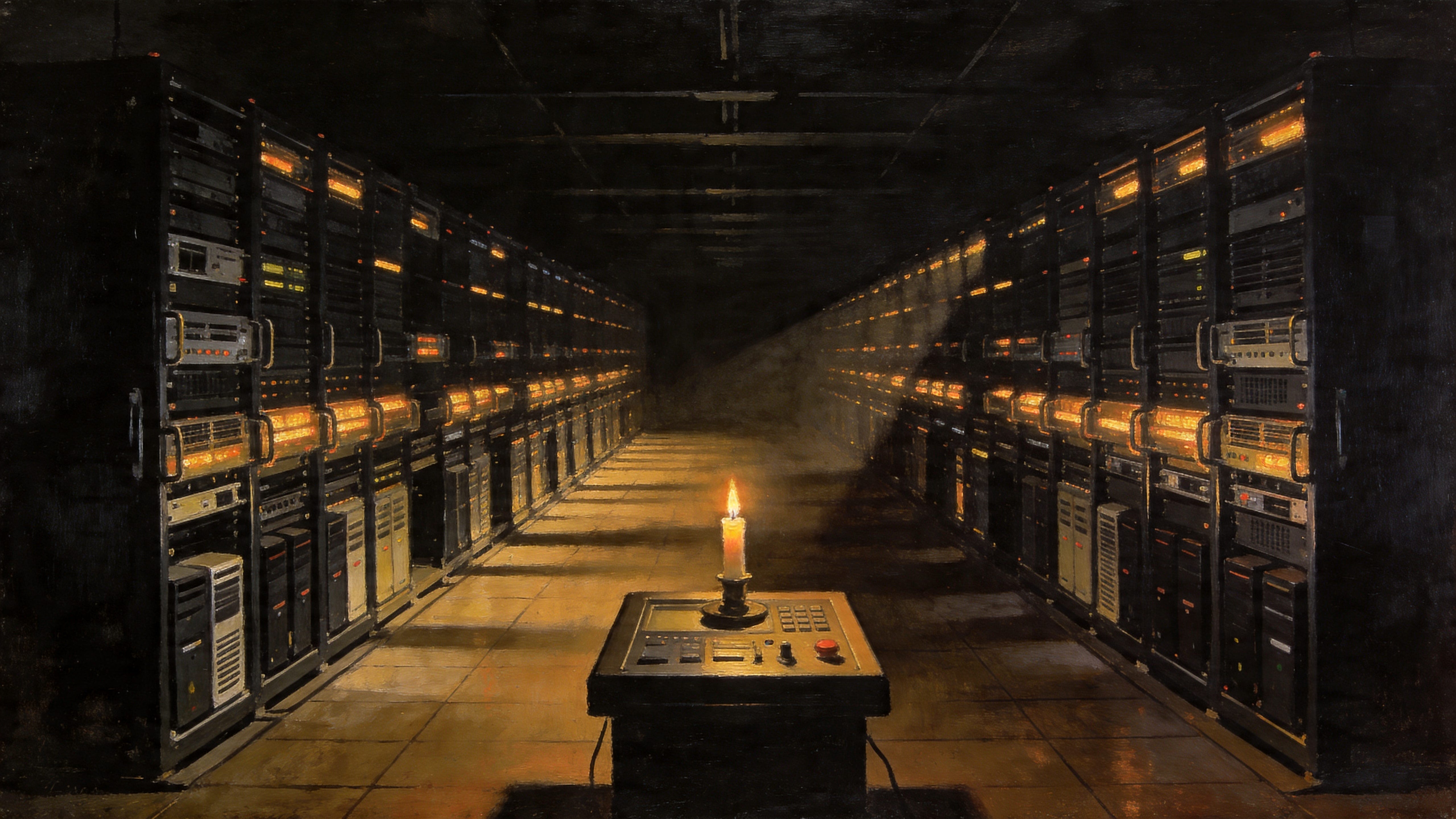
Now the thing about this? My devices don’t need to talk to each other. They only need to talk to the Mothership. The Mothership keeps track of the reports from each of the devices I “own” and which are all spying on me.
It’s called “ACR” or “Automatic Content Recognition”. Or, as I like to call it: the Dossier of What Rick Likes.
You had no clue, did you? Me, either, until I started researching things after that set of bizarre late-night TV commercials. I mean, it wasn’t one commercial. It wasn’t two.
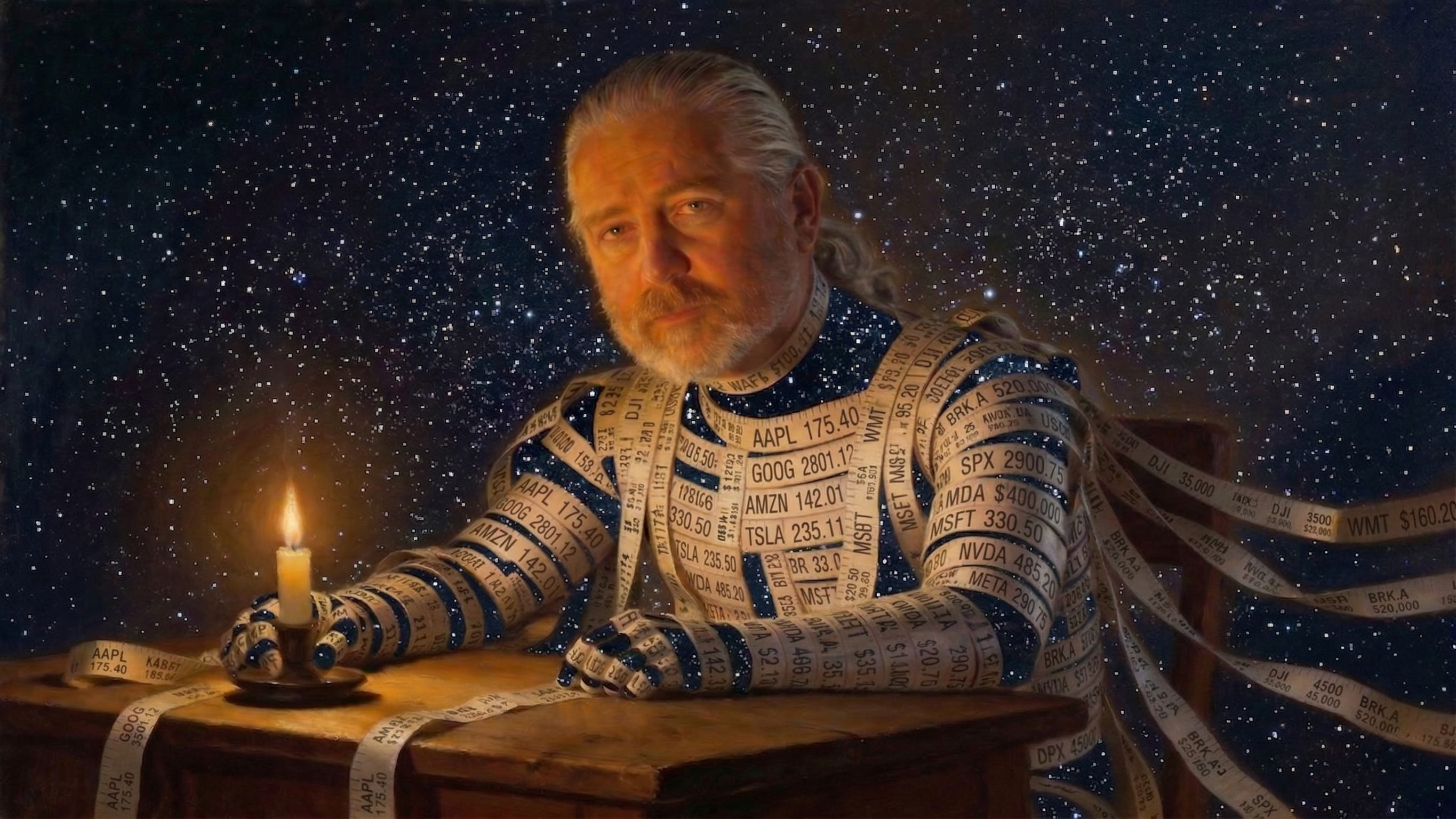
The Inversion — You ARE the Tape
It reminded me of a story my dad used to tell. If someone tells you you’re a duck and you know you’re not a duck, you can ignore it. If a second person tells you you’re a duck, you might pause for a moment. But, then, “Nah. I’m not a duck.” When the third person tells you you’re a duck?
You might want to check for feathers.
Here, you don’t need to check. The checking has already been done. You’re just being informed. Here, the ad-tech ecosystem — or you might say “echosystem” — recognized not just that you’re a duck and not just that you’re a Muscovy duck, but that your DNA shows you’re a Khaki Campbell and if they lay out the ads right, you’re going to provide them with a shit-ton of eggs.
All sterile, by the way.
And how did they get there? Every click, pause, search, and channel change is a transaction on a tape you didn’t know existed. They’re reading your psychology, finances, anxieties, and intentions in real time.
It’s amazing. As if you’d been splayed out and spread on a sammich.
Livermore’s Ghost
Livermore's edge was speed — reading the tape before the other players could react. The surveillance industry has that same edge on you permanently, because the latency is structural. You generate the data unconsciously. Just living. Making decisions — about what to watch, what to click on, what comments to post — without even making a decision.
It’s just who you are.
By the time you're aware of a preference, a fear, an intention — it's already been priced by the marketers.
You’ve been commoditized, packaged, and sold to the highest bidder.
I don’t know what Livermore’s Ghost would think of this. I suspect, like me, he would be simultaneously amazed — we’re well beyond sammiches here — and horrified.
Livermore spent his life as the one doing the reading. When the tape stopped being readable — when the edge closed — he couldn’t find another way to exist. And so he made the decision to cease to do so. I suspect he would recognize this moment immediately. Not with amazement. With dread. Because he would know exactly what it means to be on the wrong side of the tape.
Don’t misread that. I’m not talking about anything extreme here — not for me, anyway. After all, unlike Livermore, I’ve grown up with this creeping creepy corporate surveillance.
Back in the day, when we talked about your personal data being hacked, we would say you were “pwnd”. That’s passé.
Your personal data today is literally owned.
And not by you.
Plato’s Cave. Engineered.
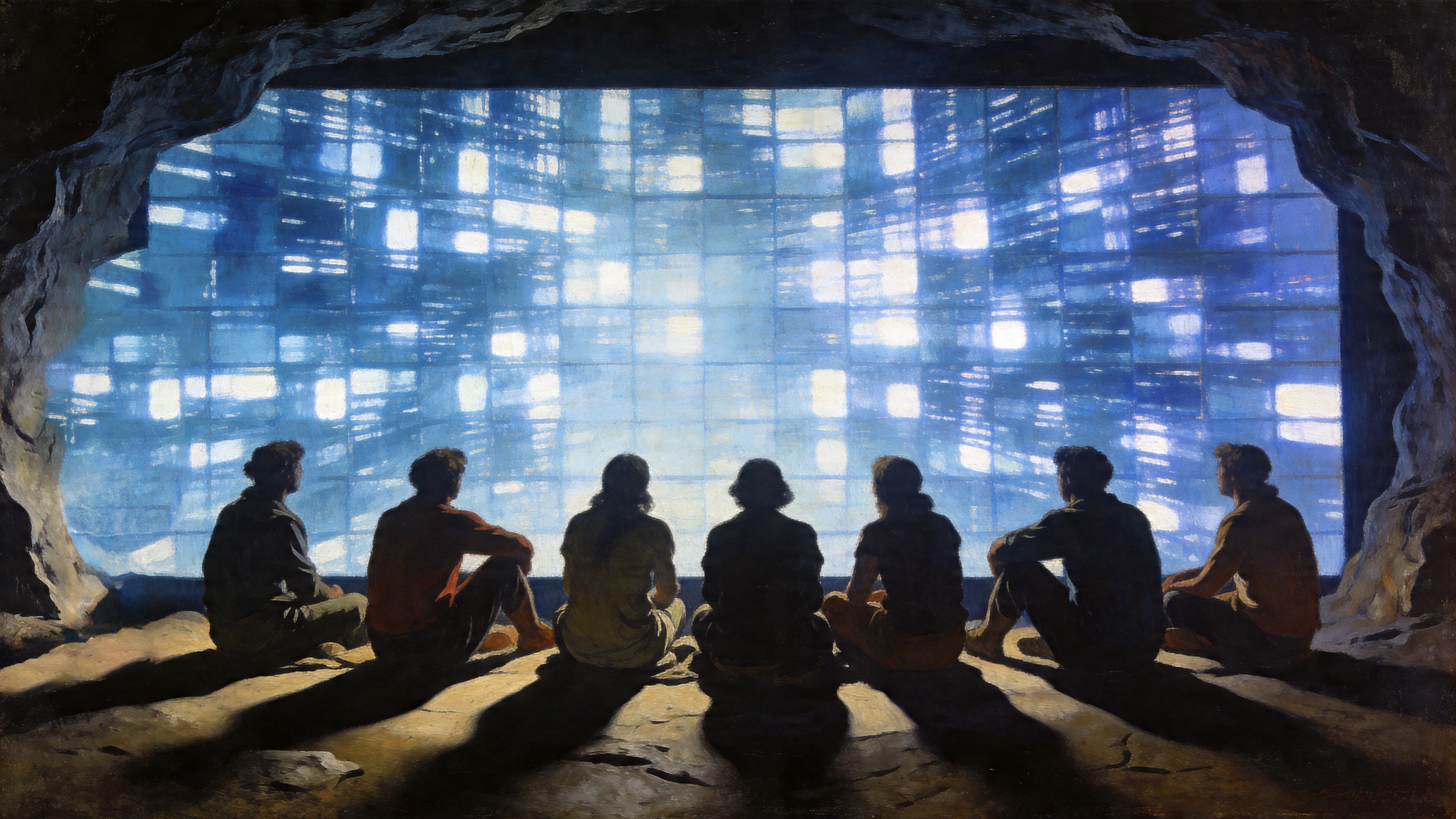
In book VII of Plato’s The Republic, we are first introduced to the Shadows.
Prisoners, shackled in such a way that they can only see what is in front of them — like a lot of people living in the real world today — see a “false reality” which they mistake for the ultimate truth. What they see are not things in themselves, but blurry, 2D projections of physical things. Shadows thrown off by the fire that burns behind them — a fire they do not even know exists.
In a modern context, they symbolize the uncritical acceptance of cultural norms, media, and “the algorithm”. And since they cannot see the source, they believe the shadows are independent, living entities.
Other than that, though, Plato doesn’t really tell us much about the origin of the shadows.
Today, the shadows on your wall aren't accidental anymore — they're optimized. The people casting them know which shapes keep you watching, which ones trigger anxiety, which ones produce clicks. This isn't a cave you wandered into. It's a cave built to your specifications, to match your expectations, by people who know your specifications and expectations better than you do.
Reflexivity — You’re the Market
George Soros — I’ve written about this before — came up with the theory of reflexivity as a counterpoint to what he considered the defective, false theory known as the Efficient Market Hypothesis (EMH). The EMH assumed that prices instantly and accurately reflect all information available to the market. In this view, “fair value”, or price, is an objective fact discovered by the market.
Soros posited that humans — who comprise the market — never have complete information. One of the reasons for this is that they are participants in the market. The incomplete information and the biases of the participants have their own impact on prices. Moreover, this occurs within a feedback loop.
The reflexivity theory was first presented in The Alchemy of Finance, but Soros went on from there to apply reflexivity to politics, the “Open Society” framwork, and geopolitical institutions.
I think it works here, as well. Automatic Content Recognition isn’t just reflecting who you are. It’s bidding on who you will become. In fact, you aren’t just a participant in this scenario. You aren’t just “reading the tape”. In a very real sense, you are the price action. The mothership is a market maker front-running your next thought, pushing you toward a self-fulfilling prophecy, nudging you to feathers.
The difference here is that in explaining reflexivity, Soros knew he had a part to play in the making of the loop. Most of us sitting in front of the fire box that provides the photons creating shadows made by LEDs in the cave wall are, like Plato’s characters, oblivious to the fire and what lies behind it.
The irony of the whole thing, though, is that just as with the Efficient Market Hypothesis, the Market Maker Mothership is working off imperfect data. The you that has been read, mined, and catalogued — while perhaps a clearer picture of your consumer habits than you are aware of on your own — is still an incomplete picture of you.
Want to help support my work without the headache of a recurring subscription?
A Market of One
The tape reader’s discipline is to recognize not only that he or she is the one being read, but the ironic incompleteness theorem. Does the Mothership really have a better understanding of you than you have of yourself? Are you one of our fine feathered friends whose whole story is written in what you consume? Is it true that the data collected on you tells someone else something about you that you’ve never understood?
In one sense, yes. It knows your revealed preferences — the things you actually click on when you’re tired, lonely, or bored — rather than your stated preferences, the person you tell yourself you are while drinking your morning coffee. It sees the “duck” because, statistically, you’ve been quacking for three hours straight.
What the Tape Reader Knows
But the Tape Reader’s discipline is to see what is actually there, rather than the story you brought to it. And the story the Mothership tells is just a high-resolution caricature. It sees the transaction, but it cannot see the intent. It sees the “Khaki Campbell” DNA, but it doesn’t know why you’re in the pond to begin with.
The danger isn’t that the Mothership knows you perfectly; the danger is that you might start to believe its caricature is the truth. Because let’s not forget how those shadows were built in the first place. This is the power of Soros’s theory: it’s a feedback loop. You were both the original source of the data and the market maker’s target.
If you spend enough time watching the shadows, you might forget that you’re the one casting them.
The Trailing Tape
In the old days, the ticker tape would spill out of the machine and coil onto the floor in a messy, tangled pile. Today, that tape is digital, invisible, and infinite. It “unspools” off into a void where there is no face on the other end — just an architecture too vast and indifferent to care about the soul of the duck.
That’s not a metaphor.
That’s the actual architecture.