

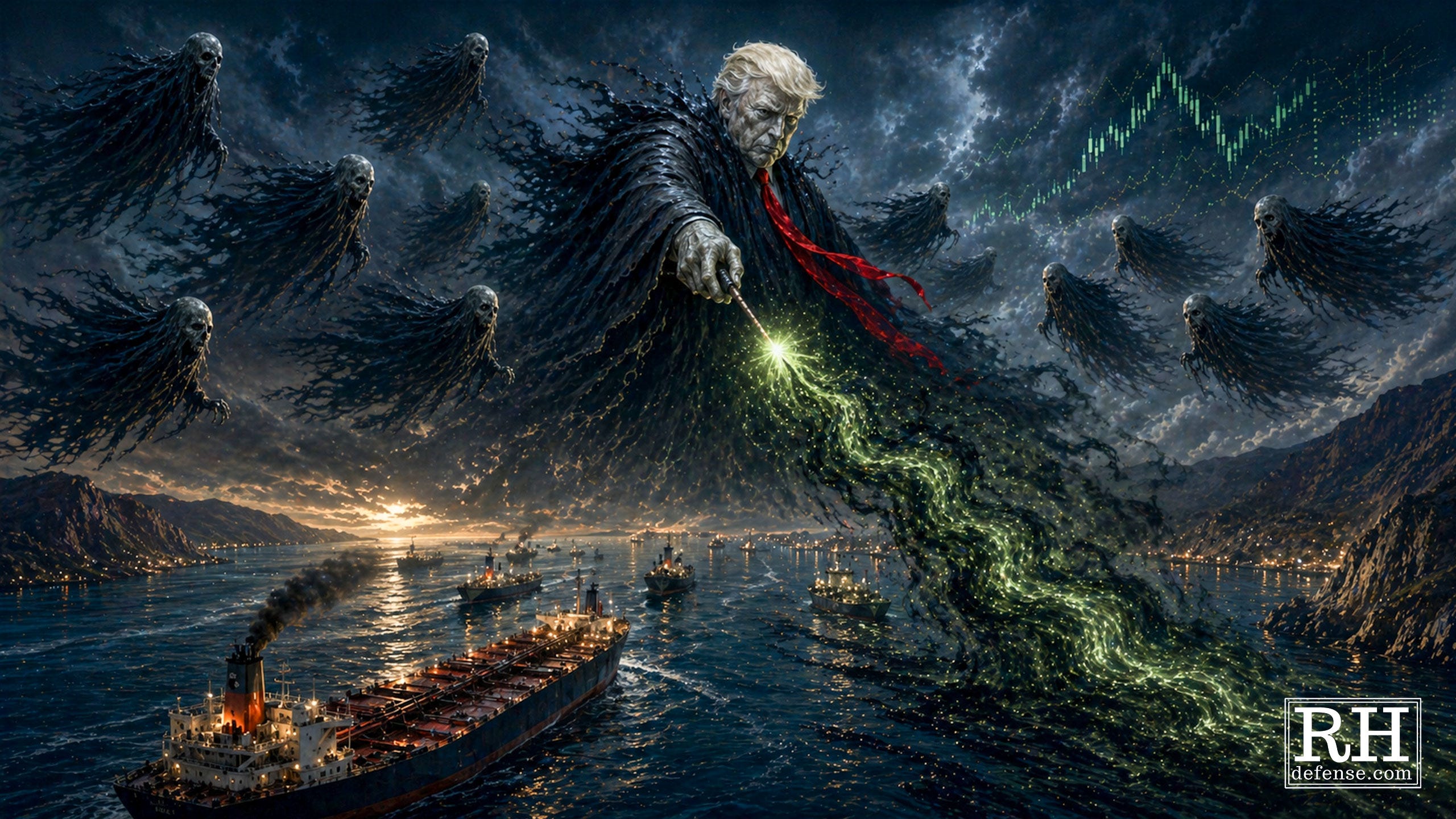
Yesterday, He Who Should Not Have Been Elected decided it was time to stir the world again. Since — like Harry — I’m not afraid to say the name, I will sometimes call him “Voldetrump”.
For one thing, it’s faster to type.
First Voldetrump said that Iran was “choking like a stuffed pig.” Of course, this is not the first time for Voldetrump to use porcine pejoratives when attacking Muslims. Crude bigotry and racism is, after all, just central to his brand. During his first campaign he became famous for it. And specifically with relation to Muslims, he told the apocryphal story of General Pershing supposedly — again, the story is apocryphal and thus likely untrue — lining up 50 Philippine Muslims, shooting 49 of them with bullets supposedly coated in pig’s blood and then told the 50th person to go back and tell “his people” what had happened to scare them into submissiveness.
That story, by the way, is right on brand for He Who Should Not Have Been Elected: it’s total bullshit.
Next, he published an AI image of himself with a gun and the words, “No more Mr. Nice Guy” — a posture he has never actually held in his life — and, as usual, the markets have reacted negatively.
I started writing this piece before 6 a.m. today. Since then, things have gone a little green based on my thinkorswim scanners for the markets. Even my personal portfolio picked up, though I’m heavily invested in tech and quantum stocks which get hit hard when the market calls “risk off”. These were doing great before the war, but have been highly reactive to the shenanigans of He Who Should Not Have Been Elected.
Meanwhile, Brent remains just around $110 after having opened when I started writing this at $120. (The link is to the live quote so it may change as time passes.) Gasoline is at the highest prices since June 2022. The national average is apparently $4.30. Yesterday, I paid $6 per gallon at Von’s, which is generally cheaper for members than gasoline elsewhere. On a recent trip to a seminar, I paid $6.50 in Las Vegas and Tehachapi, California.
Also yesterday, of course, the Fed held rates Wednesday on an 8-4 vote — which doesn't happen when things are working. The ECB held too, and warned that Iran-driven inflation could push higher. The Bank of England held, and warned the same. And on May 1 — tomorrow — the United Arab Emirates formally exits OPEC, the first member to walk out of the cartel in its sixty-five-year history.
And, finally, Bloomberg’s Javier Blas surfacing the new trading-floor acronym. We thought we were getting a TACO. So far we are getting a NACHO: Not A Chance Hormuz Opens.
TACO was about He Who Should Not Have Been Elected. NACHO is about what he broke and now can't figure out how to fix.
The TACO Trade
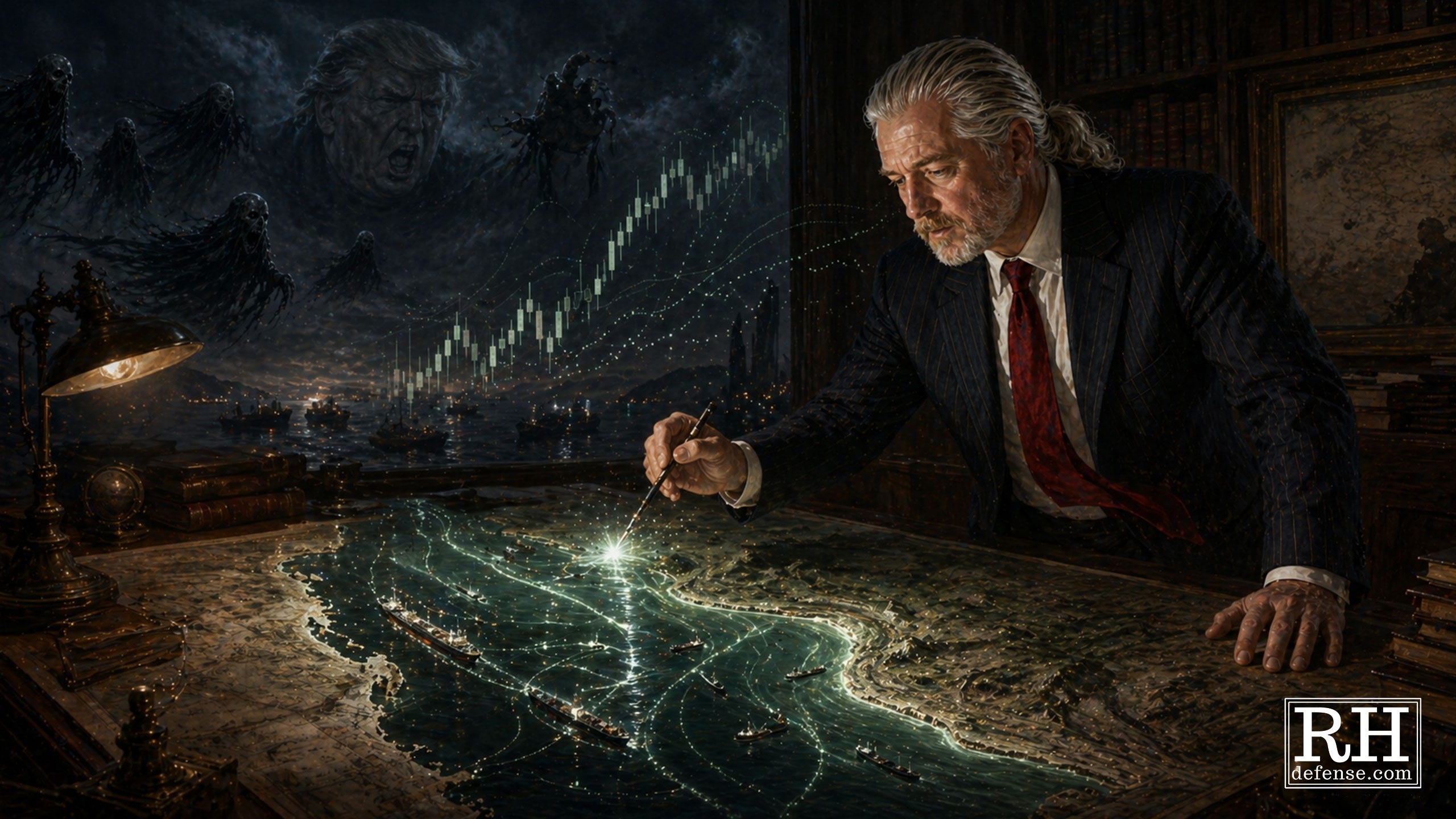
Back on March 26 — just over one month ago — He Who Should Not Have Been Elected declared a ceasefire. The markets reacted with what I’m going to call “joy” and stocks shot up.
The key point comes in the section “Trump Lies; The Tape Doesn’t” of that article. When He Who Should Not Have Been Elected claimed he was negotiating with Iran, stocks began to move up, but I didn’t chase the rally because the underlying conditions — war, Hormuz, oil, and economic pressure — had not changed. Within minutes, the rally failed.
The structural conditions that produced the bluster were all still in place, waiting. Yesterday, they reasserted. NACHO was the market formally pricing what TACO was always going to decay into.
Half-Lives
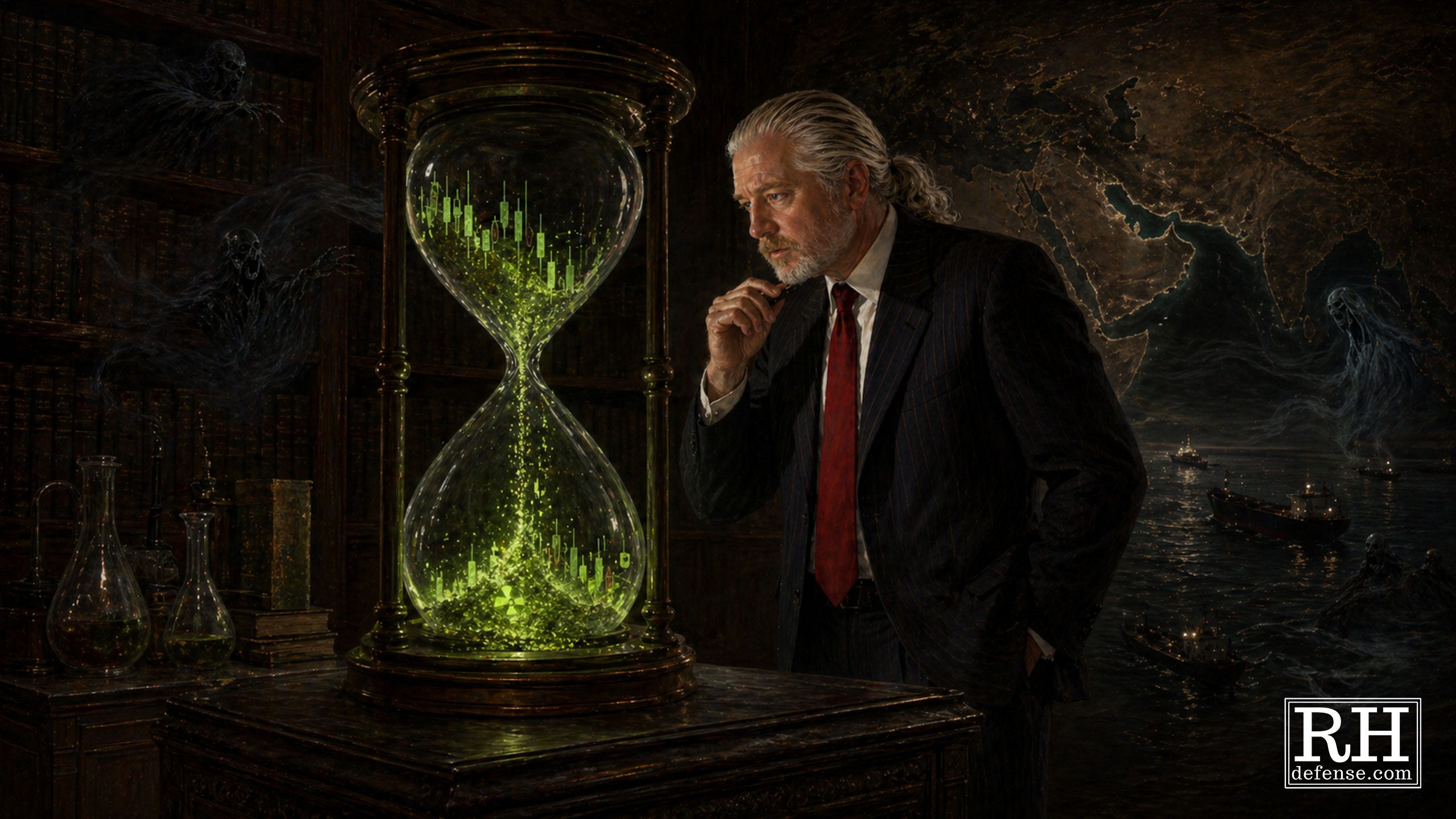
In the world of physics, a structure that doesn’t fail on a single event but rather on a probabilistic decay is spoken of in terms of its half-life. In other words, a half-life describes the decay curve.
And, of course, this type of half-life is very much in play when it comes to things like enriched uranium — which by the way has a half-life of some 703 to 704 million years.
Probably a little longer than this Illegal Iran War will last.
Horcruxes, too, create a kind of half-life. Distributed anchors of survival. Just as Voldetrump plasters his image everywhere possible in hopes of some semblance of immortality, so we see pieces of his heart and soul pumped and dumped into incomplete projects. Venezuela. Our wounded relationships with our allies. Hormuz. Enriched uranium. These on-again/off-again claims that all has been accomplished, but we need to go to war again to do it all over.
When the time comes, there are going to be a lot of horcruxes to hunt down and destroy if we’re going to return the world to what it was before He Who Should Not Have Been Elected crawled back from the half-death he endured on January 20, 2021.
Voldetrump’s diminished existence after January 20 required him to ramp up his survival through exploiting others. But even that came at a cost.
The blood of a unicorn will keep you alive, even if you are an inch from death, but at a terrible price. You have slain something pure and defenceless to save yourself, and you will have but a half-life, a cursed life, from the moment the blood touches your lips.
— J.K. Rowling, Harry Potter and the Sorcerer’s Stone 258 (1998)
The blood works because the unicorn is innocent. The curse works because slaying something innocent to save yourself is the kind of act that hollows out whatever it preserves.
The bluster posture of Voldetrump survived on the continued support of the Americans it most directly harms — the working- and middle-class voters now paying $4.30 a gallon at the pump after he promised to bring down the price of gas, watching their grocery bills climb after he promised to fix inflation, watching their retirement accounts whipsaw on every Truth Social post after he promised no more wars, and being told the whole time that the disruptions from having broken these promises are temporary and that the blockade is genius.
The host feeds on the trust of the people whose material conditions it is degrading. That’s the half-life mechanism. It isn’t sustainable in any structural sense, but it’s sustainable longer than it should be, because the people being drained are also the people being told that the draining is somebody else’s fault.
And — quite literally — buying it.
Voldetrump isn’t only a parasite, though. The unicorn-blood metaphor captures the sustenance, but it understates the agency. He hunts.
The Death Eaters in Rowling’s books are organized predation; the Dementors are something worse — feeders on hope itself, leaving their victims technically alive but emptied of the capacity to imagine a future different from the one being done to them. Dementors don’t kill. They make the kill unnecessary, because once enough joy and memory have been drained, the victim no longer resists.
And He Who Should Never Have Been Elected is the leader of the Dementors.
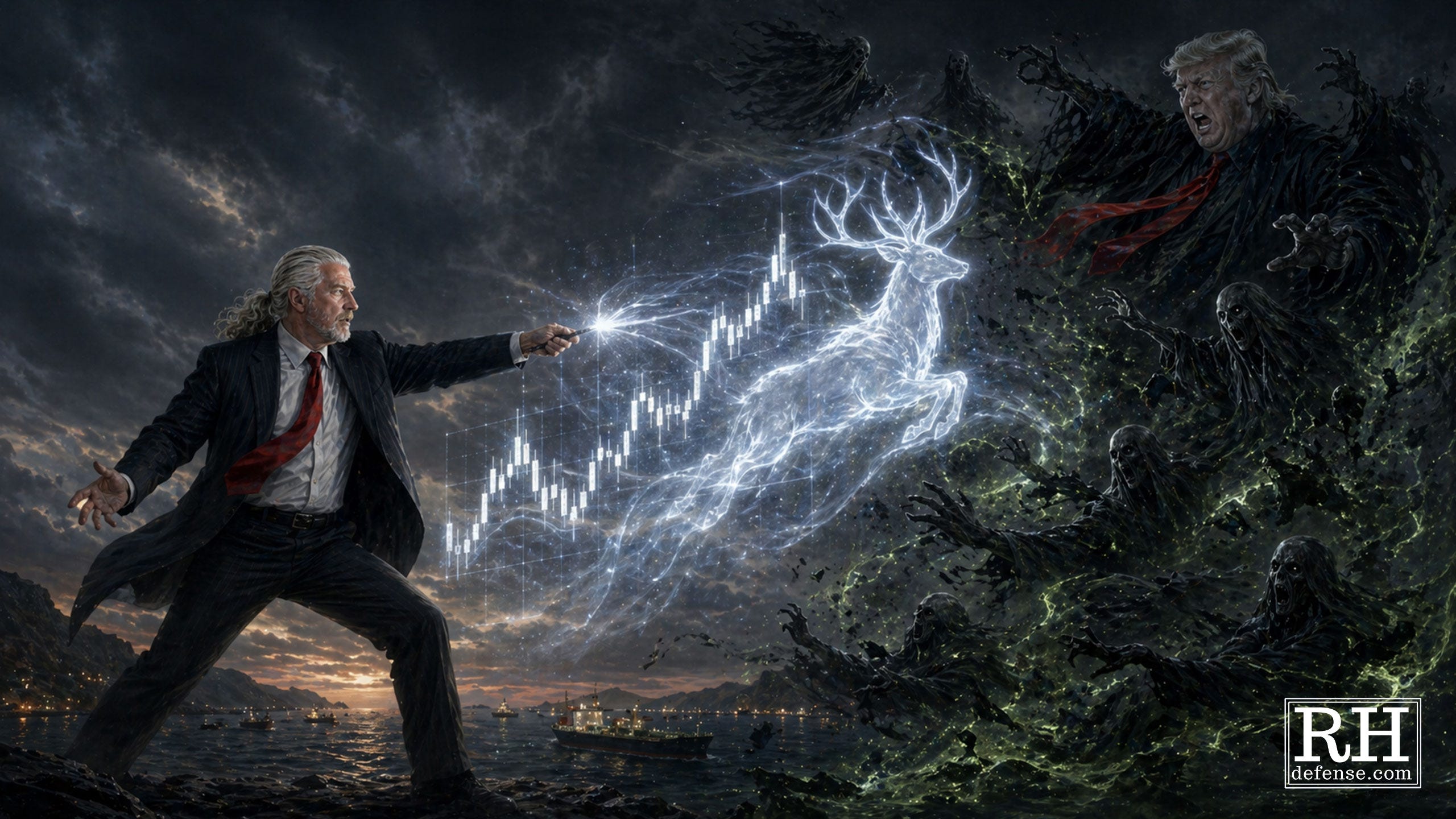
This is why Voldetrump’s core supporters — ironically the ones he feeds upon the most — continue to brush aside all criticism of him.
A voter who is being told the disruptions are temporary, the blockade is genius, the Iranians are choking like stuffed pigs and any day now they’ll cry uncle — that voter is being asked not just to absorb the loss but to misread it. To experience the draining as protection. That’s the Dementor’s trick. Not to take the life, but to take the framework that would let you notice what was being taken.
And no one has mastered that trick as well as Voldetrump.
Dunning-Kruger, Done Correctly
Dunning-Kruger is one of those terms that everyone uses and almost nobody uses correctly. The pop-culture version is “stupid people are confident, smart people are humble.” But that's not what Justin Kruger and David Dunning said in 1999. This modern watered-down version misses the part of the finding that matters most for what we’re watching.
Dunning and Kruger showed that competence and meta-competence are produced by the same cognitive machinery. The thing that lets you perform a skill — to write the art of any deal, to negotiate like nobody has ever negotiated before, to know more about ISIS than the generals, to know more about taxes than any accountant, to read a room, to model an opponent — it’s the same faculty that lets you evaluate your own performance at it. Which means people with the largest competence gaps are structurally unable to perceive those gaps, because the perception requires the very thing they lack. They are not failing to notice their failures. They cannot notice them. The mirror is broken in the same place the engine is broken.
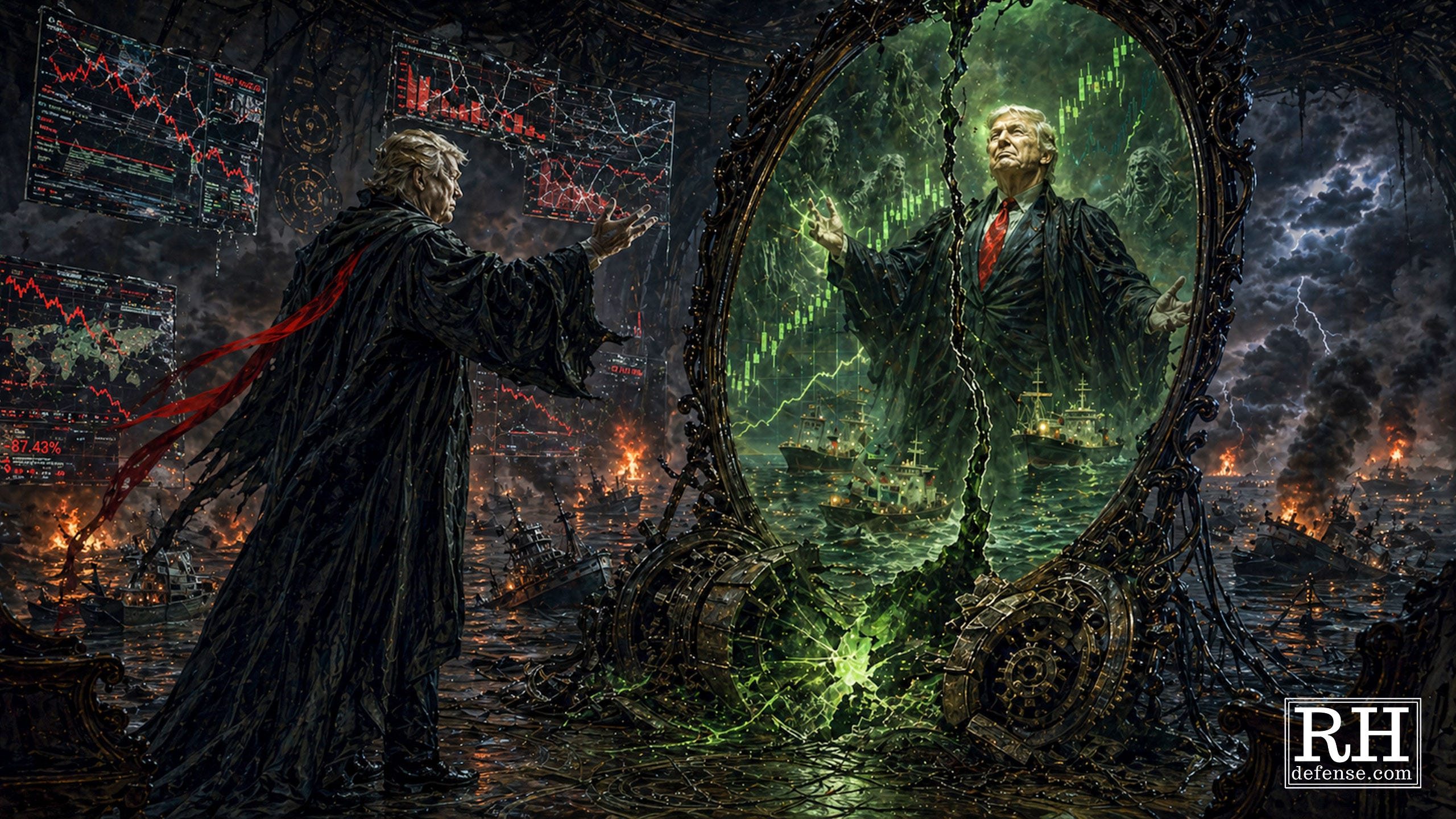
He Who Should Not Have Been Elected can’t model the market modeling him. He can’t register that calling Iranian negotiators “stuffed pigs” forecloses negotiation. He can’t perceive that the Iranians have noticed the United States reneged on the last nuclear deal and have priced his guarantees accordingly. He can’t see that the same allies he spent a year tariffing and threatening are not going to bail him out of an oil crisis of his own making. Each of these failures is structurally identical: the action requires a meta-understanding that the actor does not possess, so the action gets taken anyway, and the consequences arrive as if from nowhere.
Voldetrump isn’t reading the system, he’s narrating at it. The narration moves the system for a minute, which he reads back as confirmation. And this loop has no off switch because the off switch lives in the missing faculty — the same one that makes him falsely believe he is good at these things causes him to be unable to do the meta-cognitive piece of creating the models by which he could judge his performance.
The reason this matters for tape readers is that markets do model him. Every desk on Wall Street has a Voldetrump-statement classifier running in real time. Every OPEC minister has one. Every counter-party in every negotiation has one. He is the only major actor in the system who is not also modeling himself, and that imbalance is the trade.
Unfortunately, we pay for his losses.
But here’s the rub: Dunning-Kruger only describes the actor. It doesn’t describe why the structure survives the actor. Plenty of incompetent people have been at the controls of plenty of institutions throughout history; most produce visible failures within recognizable timeframes. What we’re watching now has been running for months, and the patches keep holding. To explain that, we need to leave cognitive science and go to philosophy of science.
Nobody pays me to watch the tape while the world’s most overconfident arsonist keeps tossing matches at the oil market, the courts, and the truth. If you value independent writing that connects the pattern before the headline catches up, you can support it here.
Popper’s Guillotine, Kuhn’s Patches
Before getting deep in the weeds on this section, I should probably acknowledge that it’s a little unfair to Popper. Even Kuhn, in his The Structure of Scientific Revolutions, took care not to completely jettison Popper’s more nuanced observations.
Popper would say his model was always meant as a normative ideal rather than a sociological description, and Kuhn’s contribution was showing what actually happens when the ideal meets the institution.
Here, Kuhn’s “what actually happens” is how we’ll address Voldetrump’s chaos.
Popper, of course, essentially said that structures fall when discomfirming evidence arrives. Kuhn disagreed. Kuhn said they get patched, ad hoc, with increasingly strained explanations, until the accumulated anomalies become unbearable. And even then the structure doesn’t necessarily collapse; it shifts.
I actually address this very point regarding Voldetrump a while back — not using that name, of course — where the question was whether his entire forty-year business career was a single repeating mechanism the market kept misreading as genius. The relevant passage on Kuhn there holds up for the present moment too:
Paradigm shifts, Kuhn observed, do not feel like paradigm shifts from inside the paradigm. They feel like a series of manageable anomalies, each of which gets explained away, until the weight of the unexplained becomes too great and the model collapses. The people most invested in the old paradigm — the ones whose identity and worldview depend on it — are reliably the last to see it.
— Rick Horowitz, The Liquidator: The Good, the Bad, and the Very Ugly Truth About Trump’s Greatest “Business” Skills (April 14, 2026)
What we’re watching now is the same dynamic at the geopolitical scale. The anomalies are arriving on schedule. American oil companies don’t want Venezuela’s oil. Ships won’t traverse the Strait of Hormuz. The Strategic Petroleum Reserve release barely moved the price. Allies refuse to help. Iran won’t break. Each anomaly gets a patch instead of an update — they’re being unreasonable, we’ll force them; we’ll bomb Kharg Island, that'll fix it; we’ll release more reserves; we never needed those allies anyway; they’re choking like a stuffed pig, any day now.
We’re Winning! So Much Winning!
Popper would see the thesis disconfirmed. Kuhn says things won’t really fail until the patches stop holding. The half-life is the patch-holding interval.
And NACHO? NACHO is the frustrated identification that the patches really don’t look like they’re going to hold this time.
The Liquidator’s Edge and Yours
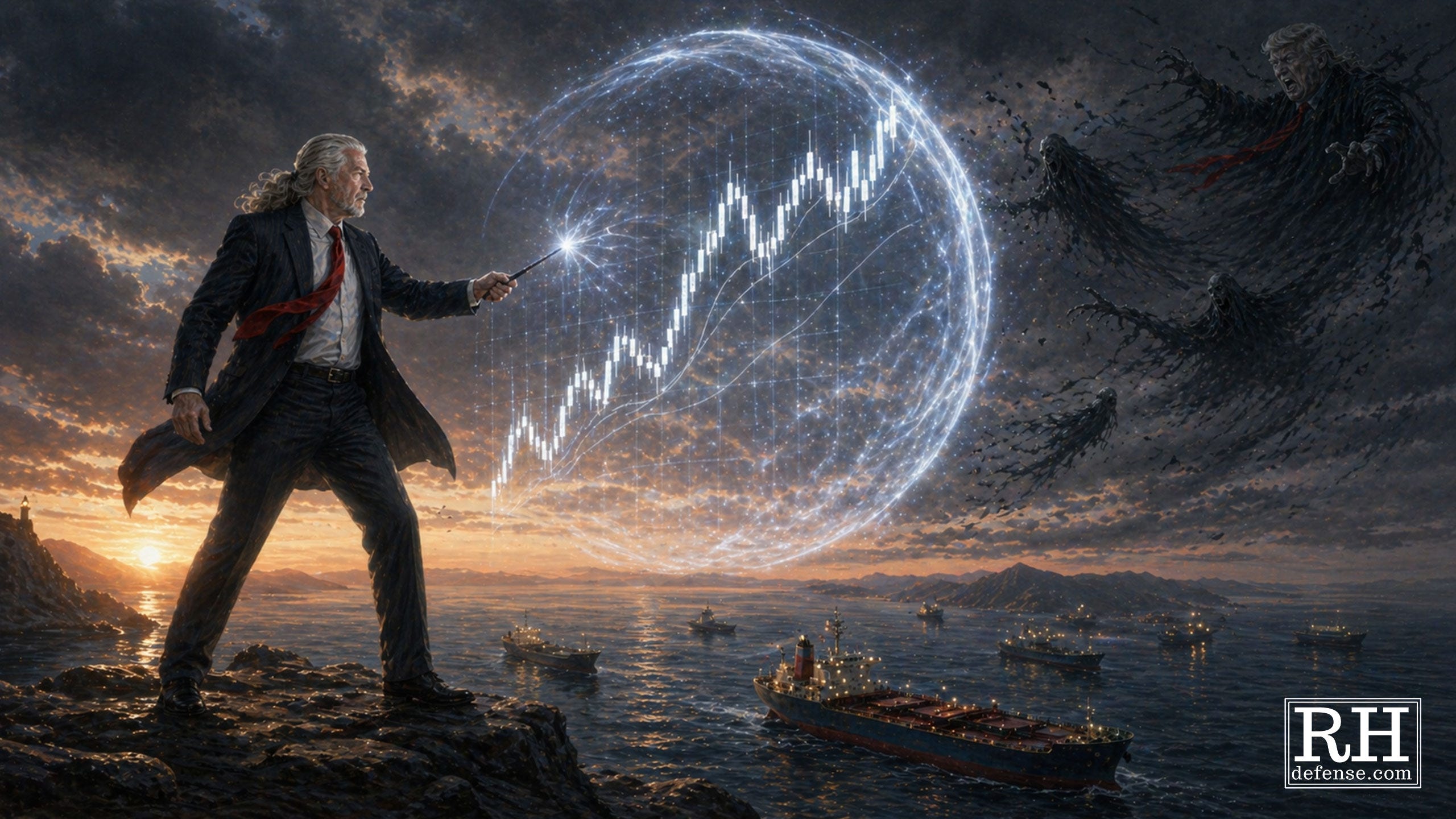
I’ve really tried to make this more of a “markets” and “trading” and “reading the tape” piece than something political. You’ll have to judge my success or failure — that’s what the comments section is for, by the way.
Think I got things wrong? Or right? Leave a comment!
The point here is that tape reader’s edge is to hold the structural frame and the news cycle frame simultaneously without confusing them. The whole point of the half-life thesis is that single sessions don’t resolve anything. A green tape today — and while I’ve spent the morning writing this, mine did turn green — is not a counter-argument to my thesis. It’s a data point that fits the model.
Oil itself is still around $104 to $105, barely off from yesterday's $107, and still being very much felt at the pump.
Nothing structural happened today. The strait is still closed. NACHO still stings. The UAE still leaves OPEC tomorrow. The Fed is still split 8-4. Iran’s proposal to reopen Hormuz in exchange for deferring nuclear talks remains rejected. The CENTCOM meeting tomorrow between Brad Cooper and Voldetrump could go either way. But the algos and the short-covering desks rolled the June contract, picked up the absence of fresh bad news, and bid risk back up. That’s the patch holding for one session. Bloomberg is even labeling it as such.
Brent crude cooled off after ripping to a four-year high as the market braced for a protracted US war with Iran, in a session marked by machine-led trading and thin volumes.
— Bloomberg News via Yahoo! Finance, Oil Retraces From Four-Year High as War Fears Dampen Liquidity (April 30, 2026)
And what was posted on Schwab’s website back on April 10 still holds today.
Markets rallied on the U.S. and Iran ceasefire announcement, but these moves look to be driven more by rapid unwinds of hedges and speculative positioning than by a fundamental resolution of the conflict. Market volatility is likely to remain high with headline risk driving short-term swings.
— Michelle Gibley and Chris Ferrarone, Truce in Iran: Relief but Not Resolution (April 10, 2026)
One green session — or even a few intermittent ones during a period of ongoing political volatility — is not a refutation of my structural thesis. The retreat phase of TACO is not the resolution of NACHO. The patches will keep getting stapled on for as long as the political tolerance for the patches holds. And then one day, on no particular news, the cascade will arrive — because, as Kuhn showed, that’s how late paradigms always end.
The lesson isn’t to trade harder. We have to stop thinking a single event is going to resolve what no single event can resolve.
A Half a Life Can Still Be a Very Long Time
This war was ostensibly about enriched uranium. As I mentioned above, the half-life on that is hundreds of millions of years. The second term of He Who Should Not Have Been Elected has not yet hit its half-life.
The reality of the damage Voldetrump has done to the United States, to the world, to our markets and our alliances? Some of that damage will compound. Some will decay. None of it resolves in a single session — or even concession.
The half-life of this thing is going to be measured in years.
Not news cycles.