About Reading the Tape

The Story Isn’t The Tape
The stock market taught me something I should have known for decades: I’ve been reading the tape my whole life. I just didn’t have the phrase for it.
In the old stock-market sense, the tape was the ticker tape: price, volume, time, sequence. The printed record of what actually happened. Jesse Livermore said the tape doesn’t lie, and I think that is right in the only sense that matters. People lie. Headlines lie. Prosecutors lie. Politicians lie. Markets sometimes mislead, but they do not flatter you. They do not care what story you brought with you. They print.
That does not mean the tape is easy to read. It does not mean the tape tells you everything. And it sure as hell does not mean that every pattern you think you see is really there. But it does mean that if you want to know what is happening, you have to start with what printed instead of what someone is trying to sell you.
The first story is usually the sales pitch. The tape is the receipt.
What “The Tape” Means Here
I’m Rick Horowitz. I’m a criminal defense lawyer in Fresno, California. For decades, I have been reading the tape in courtrooms: witness behavior, police reports, prosecutorial tells, judicial tells, jury reactions, gaps in testimony, the careful sentence that does not quite answer the question, the silence where an answer should have been, the little mismatch between the official story and the actual evidence.
Then, late in life, I started learning to trade, and the metaphor snapped into place. The stock market did not teach me to read the tape. It taught me that I had already been doing it in other rooms, with different stakes, under different names.
A chart prints a tape. A courtroom prints a tape. A scam website with no footprint prints a tape. A politician trying to outrun his own record prints a tape. An AI model confidently completing the next likely sentence prints a tape. So does the human mind when it starts filling in what it wants the next candle to mean before the market has printed it.
That is what this publication is about.
Reading the Tape is not a trading newsletter, though I write about markets. It is not a legal newsletter, though law is the main place where I learned to distrust clean stories. It is not a politics newsletter, though politics gives us more tape than any decent society should have to read — especially in the TACO Era. It is not an AI newsletter, though AI has become one of the strangest mirrors we have ever built. It is about the method underneath all of that: looking at the print before accepting the story.
What Gets Read Here
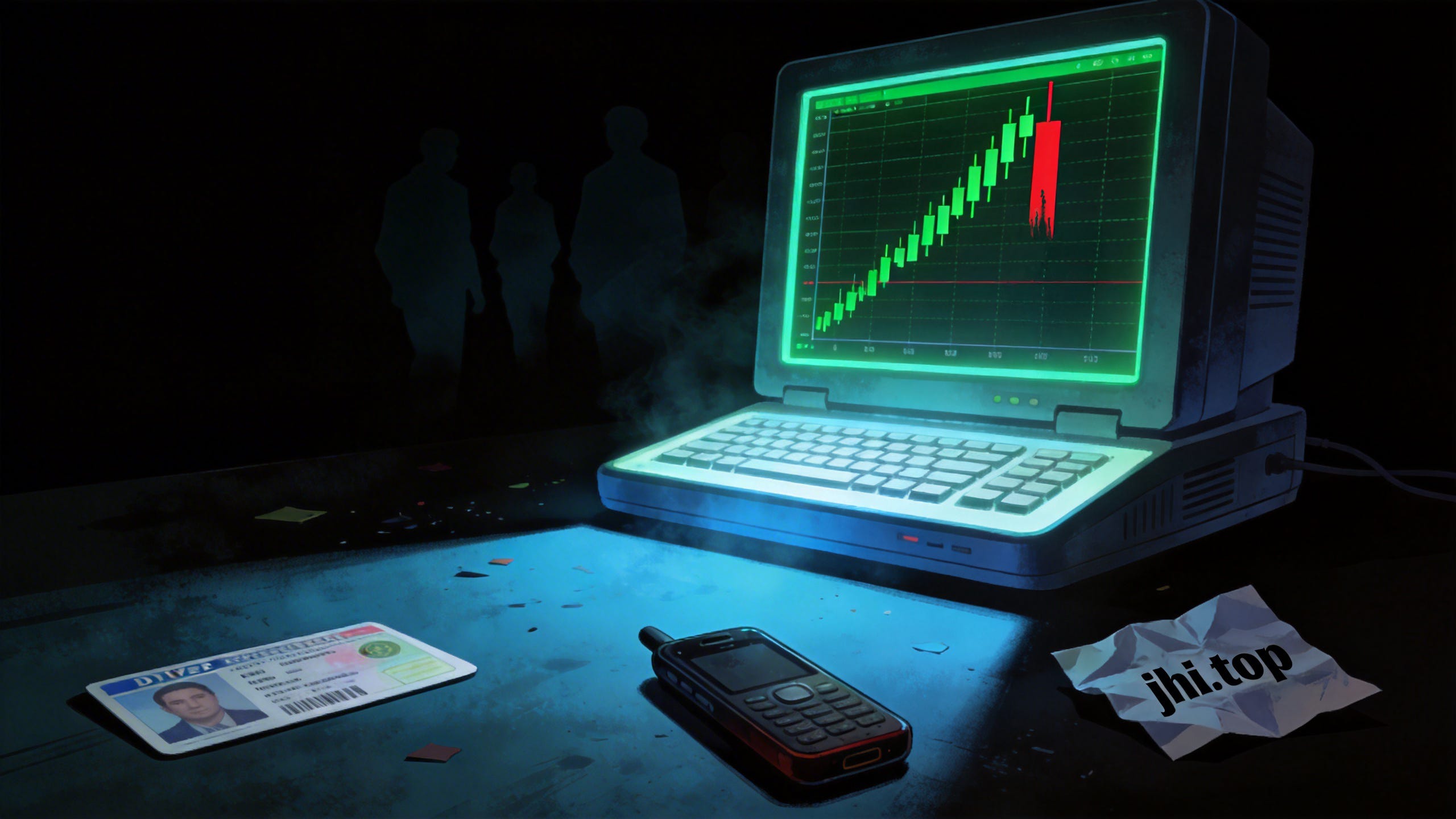
Sometimes the tape is obvious. A market gaps up on a headline and fails within minutes because the underlying conditions did not change. Sometimes the tape is hidden in what is missing, as when a supposed financial platform has no real footprint, no history, no chatter, no trace, and the absence itself becomes the signal. Sometimes the tape is buried under layers, like a word whose suffix appears to mean one thing until you scrape down into usage and history, or a painting whose x-ray reveals the earlier figure under the finished surface.
And sometimes the hardest tape to read is the one inside your own head.
That is the part I keep coming back to. Pattern recognition is not magic. Human beings are pattern machines. We complete sentences, motives, memories, charts, stories, futures. Most of the time that is how we survive. Sometimes it is how we fool ourselves. A partial pattern starts printing and the mind rushes ahead, supplies the missing piece, and experiences the completed story as if it came from the world instead of from the machinery between our ears.
The hard part is not seeing patterns. The hard part is knowing whether the pattern is real, incomplete, or something your own brain supplied.
How I Got Here
I came to all this the long way.
I graduated from CSUF in the mid-1990s with a degree in Philosophy, after my undergraduate work had wandered through linguistics, anthropology, logic, and the parts of cognitive science that were just then crystallizing into something the field could agree to call itself. What I was really chasing was the philosophy of mind. I read Paul and Patricia Churchland on eliminative materialism — the argument that the folk-psychology categories we use to explain ourselves to ourselves might not survive serious scientific scrutiny. I read Dennett on consciousness and Searle on intentionality, and what each of them said the other had gotten wrong. I read Pinker on language. I sat with logic under Irving Copi, whose textbook was the gold standard then and whose mind was even better than the book. I corresponded with Endel Tulving about a peculiarity of my own memory that, decades later, the field would name Severely Deficient Autobiographical Memory. I read Elizabeth Loftus on the reconstructive, confabulatory nature of remembered events — work that has since been confirmed in courtroom after courtroom by witnesses who were entirely sincere and entirely wrong.
(And, by the way, I knew, met, and conversed with all these people!)
All of that turned out to be tape-reading training. The philosophy of mind is, at bottom, the study of how a piece of meat — or, as Marvin Minsky was found of saying “meat machines” — builds an experienced world out of incomplete input, and what kinds of mistakes that meat is structurally prone to. Confabulation is not a metaphor I picked up from trading. It is a topic I had been thinking about for thirty years before I ever opened a brokerage account. The reason I distrust the clean story is that I was taught, by people who had spent careers proving it, that the mind producing the clean story is the same mind that fills in the missing piece of a Necker cube or remembers a stop sign that was actually a yield.
I wanted to become a professor of philosophy. That did not happen. The proximate cause, though not the only one, was one of my professors — Dr. Slinger — telling me I was probably not Professor of Philosophy material. I have spent thirty years deciding whether he was right.
So I went and built something else for a while.
I helped start two early ISPs in Fresno, California — Cybergate and Protosource Network — in the years when the public internet was still more of a project rather than a fact, and worked on the network infrastructure that became, eventually, the substrate underneath everything this publication now treats as the world — the markets, the platforms, the surveillance machinery, the AI models trained on the printed exhaust of all of it. From there I went to Valley Yellow Pages, first as Network Administrator (and designer and builder) and then as Director of Information Systems, a job I held for years. By forty-four, I had a successful technical career and no particular reason to start a new one.
Jim Varon, the company’s in-house counsel, had been working on me about going to law school over lunches that kept returning to the same question. I gave him the same answer every time. “Jim, I’m 44 years old. By the time I graduate, I’ll be 48.”
One day, Jim said: “How old will you be in four years if you don’t go to law school?”
It turned out that going to law school in my forties was not leaving anything behind. Not the philosophy. Not the years building the infrastructure underneath the digital world. Not the long habit of asking what story someone was trying to install before the print supported it. Every criminal case is epistemology with consequences. What do we know? How do we know it? Who says? What are they asking us to assume? What was omitted? What did the witness actually say? What did the officer write before anyone realized the report would matter? What story is the government trying to install before anyone has read the print?
That is still philosophy. It just wears a suit and has a client whose life or liberty are on the line.
Start Here
If you are new to Reading the Tape, these pieces give a better sense of what happens here than any short description could.
Evolution of a Tape Reader
Where the metaphor started for this publication: trading, retirement, Livermore, and the realization that I had been reading tape long before I had a brokerage account.
The Ghost Exchange
A story about a suspicious trading platform, a missing footprint, and why silence can be data.
The Traded Self
What happens when the tape starts reading you back through ads, surveillance, targeting, and the machinery that knows your habits before you do.
The Tape is a Palimpsest
Spanish suffixes, buried paintings, place names, and the layers underneath the surface we mistake for the whole thing.
The Flinching Mirror
The other side of the problem: reading the next candle before it exists, and the danger of confusing prediction with confabulation.
Why Subscribe?
Subscribe if you are tired of being handed stories before anyone has examined the print. I write about markets, law, politics, AI, language, memory, scams, stories, institutions, human behavior, and whatever else is printing loudly enough to deserve a closer read. The subject changes because the world keeps changing the surface. The method stays the same.
Start with what printed.
Then ask what story someone is trying to build on top of it.
Don’t miss a print
Every new post lands directly in your inbox. No algorithm deciding what you see, no ads, no noise. Just the tape, printing in real time.
You can use this button to make a one-time donation to help support my writing. This is what helps me to keep these posts flowing.
Join the Reading
The best tape reading happens in conversation. Bring your own reads, your own pattern recognition, your own experience. The comments section is open, and that is where this becomes more than a newsletter.