

In my “inaugural post” I told you where tape reading started — a child walking into a bedroom, a crying mother, a false “nothing's wrong.”
What I didn't tell you is where storytelling started. Turns out they were born in the same house, at roughly the same time, for the same reason.
After all, I quickly figured out that everyone else was telling stories. Their stories were often pure fiction. Nor did anyone want to hear any painful truths.
I closed out my inaugural post with these words from Kierkegaard:
Life can only be understood backwards, but it must Be lived forwards.
— Søren Kierkegaard, 2 Kierkegaard’s Journals and Notebooks: Journals EE–KK 179 (Alastair Hannay et al. eds., Bruce H. Kirmmse trans., Princeton Univ. Press 2008) (1843)
It’s fitting, then, that only in retrospect did I myself realize that actual, deliberate storytelling became the outlet for me to talk about my own feelings.
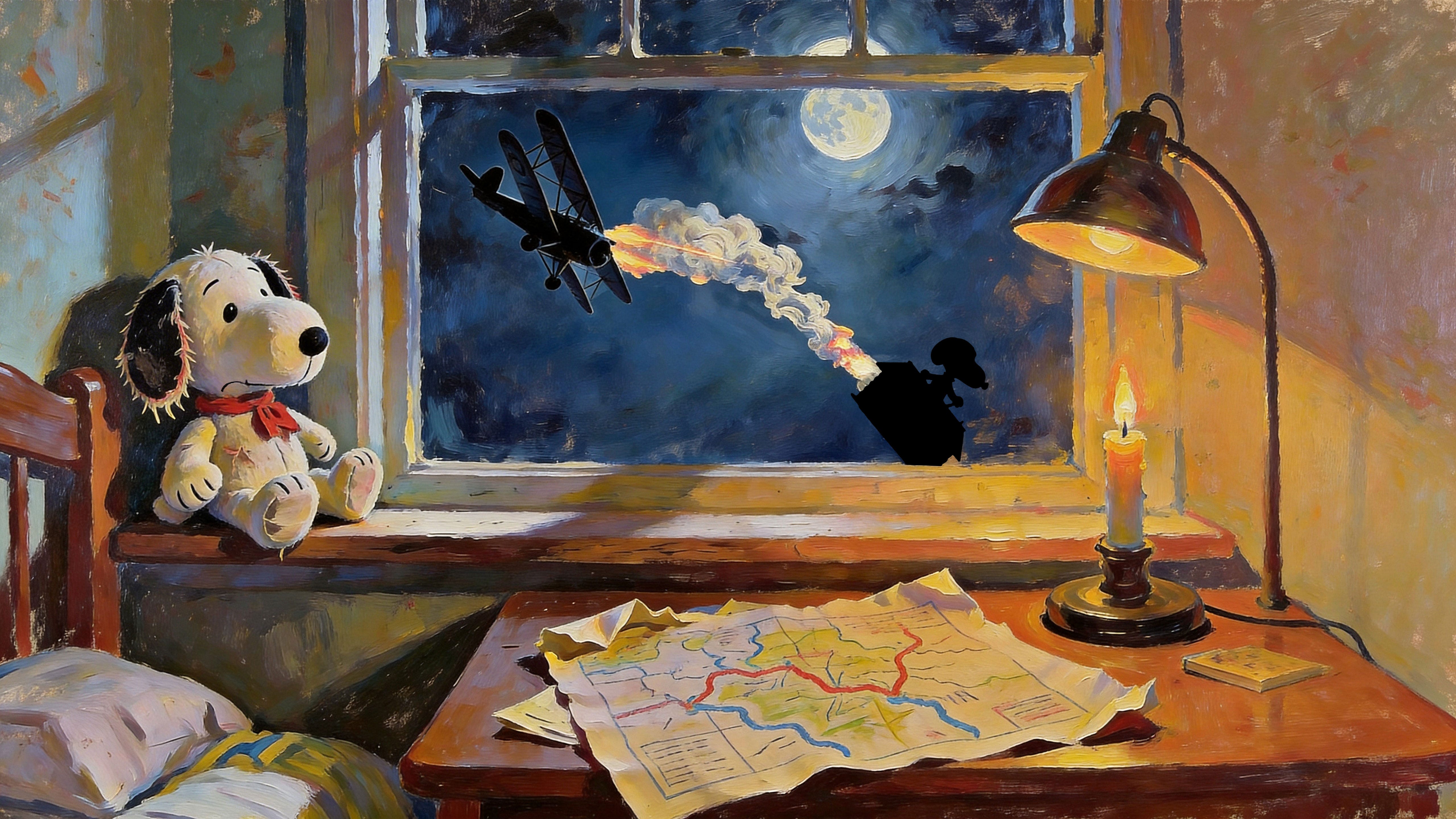
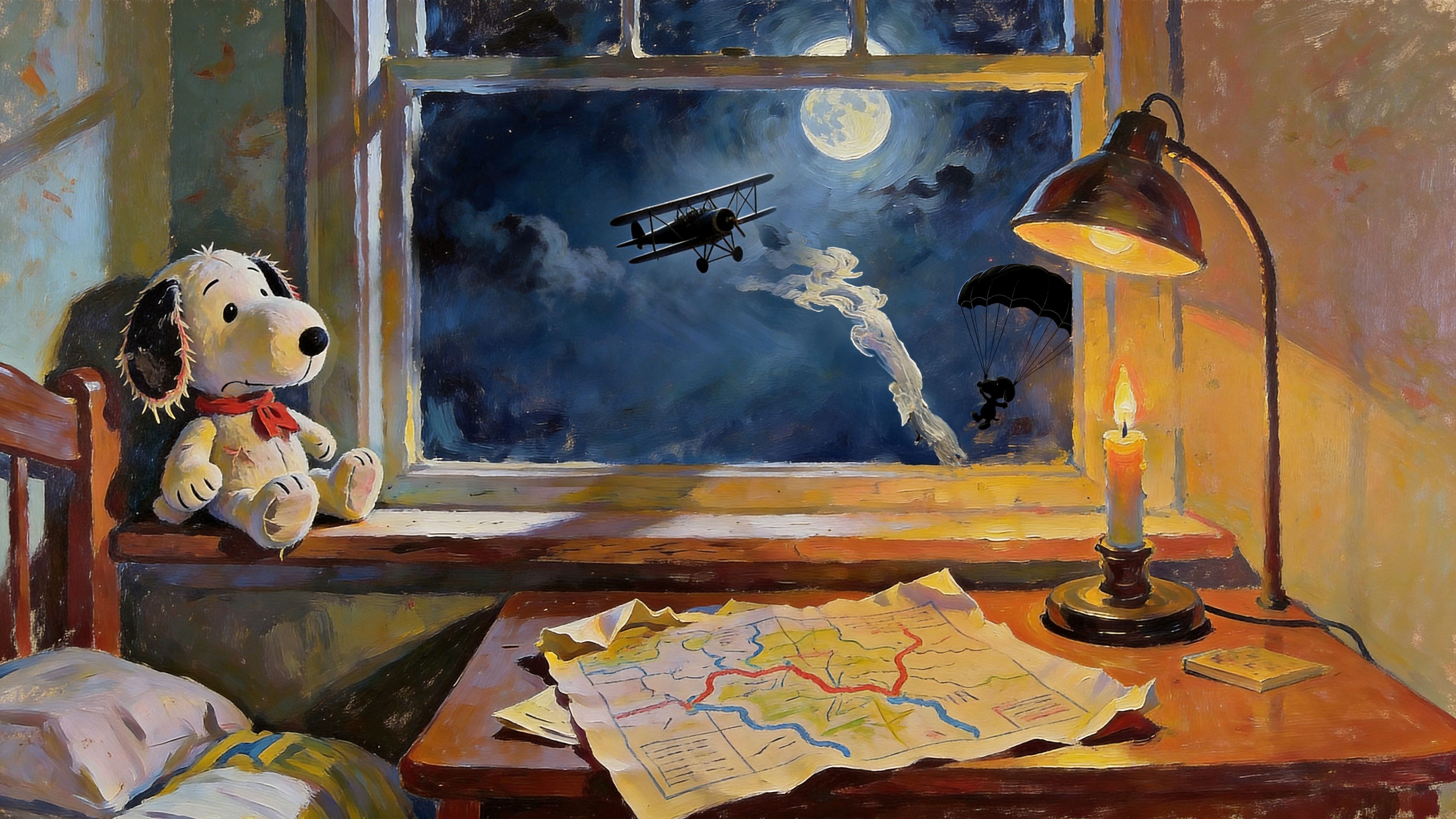
When I was a young child, my “journals” took the form of short stories of Snoopy and the Red Baron. Complete with drawings of dog fights (haha!) with bullets zipping through the air. Snoopy’s doghouse spiraling: sometimes up, sometimes down. The Red Baron zigging and zagging. Ilustrated stories that I call “journals” because often, how things were going for me determined how things went for Snoopy.
In addition to the fight scenes, sometimes my drawings were of maps. After all, if you go down, you need to find your way home afoot! To this day, I occasionally like to doodle maps.
As alluded to, I was Snoopy. Fighting to stay in the sky. Aiming to take the Red Baron out of the sky. But, although I was Snoopy—I was otherwise myself—I was frequently shot out of the sky. Down the doghouse would spiral, a stream of smoke trailing behind. Maybe two. Maybe more.
— Rick Horowitz, I Kept Journals…And Then I Was Gone (September 5, 2024)
I imagine this is how it is for all writers. For me the child who couldn’t read his own reality directly encoded it into fiction where he could examine it from a safe distance.
I’ve done that my whole life: with varying levels of self-awareness, I’ve printed the tape so that the tape reader in me could read myself. The doghouse spiraling down trailing smoke wasn't fantasy. It was reporting.
In the evolution of me reading the tape, I’ve moved beyond reporting to self-analysis.
Anticipation & Pattern Recognition
And there are the maps. A child who draws escape routes inside his stories isn’t playing — he’s anticipating the next print before it arrives. Pattern recognition as survival mechanism, rendered in a child’s pencil drawings. The earliest form of what Livermore did with ticker tape. The maps weren’t decoration. They were the whole hidden point. The kid knew he was going down. What was needed was a plan for what to do next.
The maps were his view of the troubled landscape he was going to need to figure out how to navigate if he wanted to make it to safety.
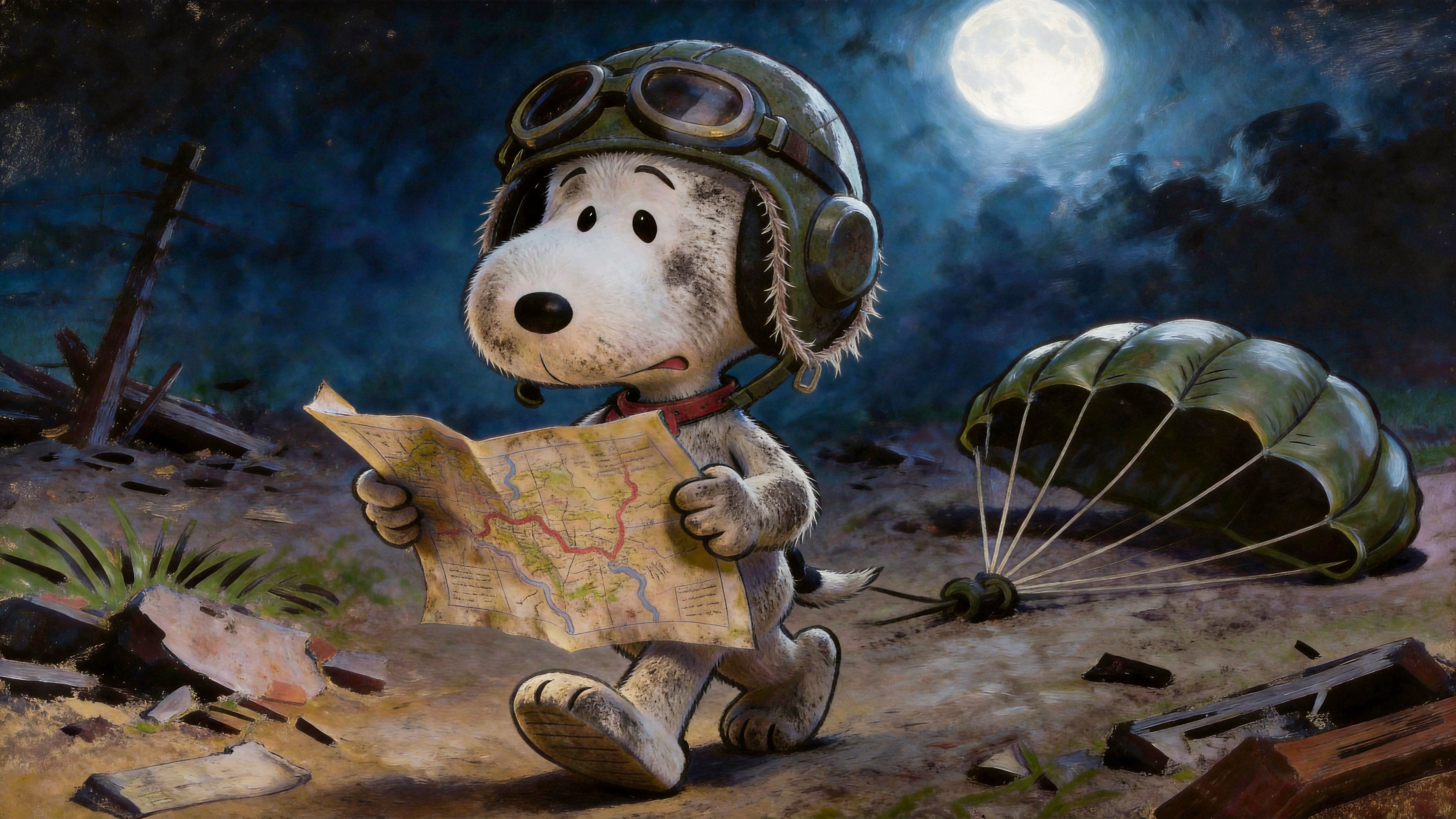
Sadly, those maps — along with the stories, as I explained in I Kept Journals — are long gone. I have often wondered what happened to them and wished I could read them for clues — reminders, actually — of what I was like as a small boy. I strongly suspect that the Snoopy stories were the most faithful record of my interior life (without my realizing it at the time) that I ever kept. They would have been more honest than my later journals, because the fiction didn’t know it was confessing.
And yet those are the stories that didn’t survive. Everything that was too painful to say directly got encoded in the stories — and the maps probably contained hints of the dangers I thought I needed to avoid in order to escape — which is why losing them was different from losing, say, a box of school papers. (Though I actually mourn some of those, too.)
The problem is that I don’t really remember that much of my childhood. It comes in snippets and foggy memories. The road from my childhood to who I am now is full of potholes.
I blame the Red Baron.
In reality, the SDAM I mentioned in Evolution of a Tape Reader probably should rightly shoulder that blame. The Rambler where last I saw Snoopy and the Red Baron is gone. The folder containing the stories is gone. But I remember the pale green color of the car. I remember shoving the folder under the seat. I remember that Snoopy went down more often than he prevailed.
The tape kept the pattern and lost the record. Which is exactly what SDAM does. The episodic context gets stripped but retains the shape of the memories. The stories are gone but their emotional weather has been informing everything I've written and pretty much everything I’ve felt since.
Storytelling as Reading the Tape
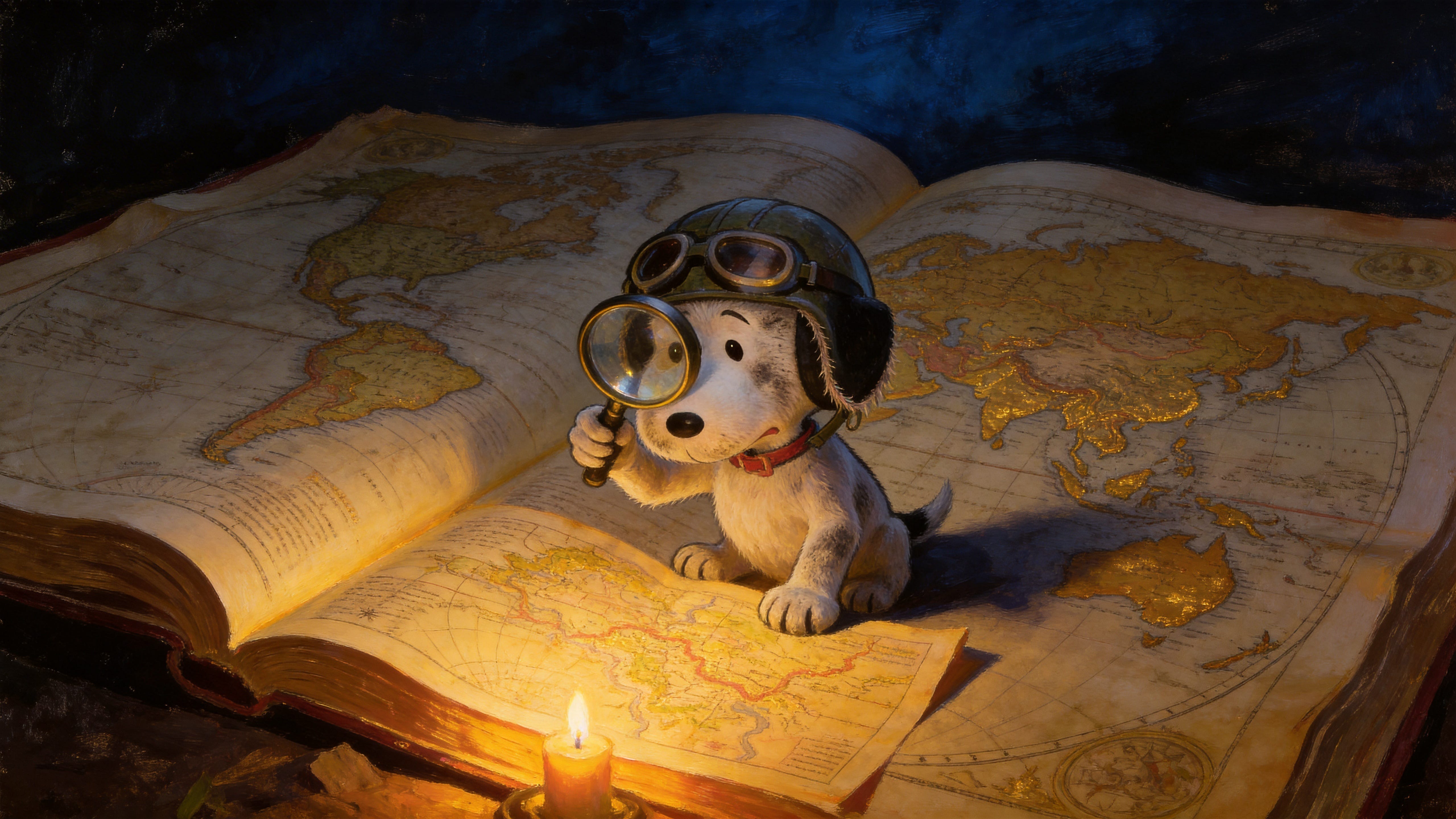
I now realize that storytelling is tape reading by another name. The fictional frame permits me to examine realities that direct examination won’t allow. The writer and the tape reader are the same person doing the same thing with different tools.
Or as another writer put things:
I write entirely to find out what I’m thinking, what I’m looking at, what I see and what it means. What I want and what I fear.
— Joan Didion, Why I Write, Literary Hub (January 26, 2021)
I think this originally appeared in N.Y. Times Book Rev. (December 5, 1976) but the version where I found the quote is on the Literary Hub.
Anyway, I said a very similar thing when explaining why I wanted to write The Afterlife Bus.
The “why,” then, is that I must tell this story so that I can read this story. So that I can know what it is that I want to do. Call it platonic self-examination.
— Rick Horowitz, The Afterlife Bus: What Kind of World Should We Build? (September 20, 2021)
So I write the story — the tape prints — then I read the tape to understand my own self. As a child, I did this unknowingly. Snoopy and the Red Baron constantly battling things out in the sky help me to ground myself. The maps (and I still like to draw maps sometimes) cut a path through fear and uncertainty. By drawing them, I not only gave my fear and uncertainty a voice, but I gave myself a safe path through them.
Until the Tape Runs Out
There’s a story I’ve been carrying around for years, unwritten. A man is shot in the head on a city street. The bullet enters. The story begins. It’s told in the first person — because of course it is — and it’s the story of his life, unreeling in the dying brain’s final prints. Periodically, I report the bullet’s progress. As the bullet reached the optic nerve, I remembered being ten years old... The tape playing out to its last tick.
I don’t know yet if I’ll ever write it. What I know is that I’ve been drawing the map for it for a long time. I want to write it.
And unless someone could find The Snoopy Files, any evidence that I know how to write fiction is gone. I’ve written snippets of fiction. But I’ve never yet completed a story.
But the pale green Rambler is long gone. The folder under the seat is gone. Snoopy and the Red Baron are probably somewhere in a landfill for all I know, or dissolved into soil, or — and this is the version I prefer — still fighting it out somewhere over where the North Sea meets the English Channel, neither one willing to go down for good.
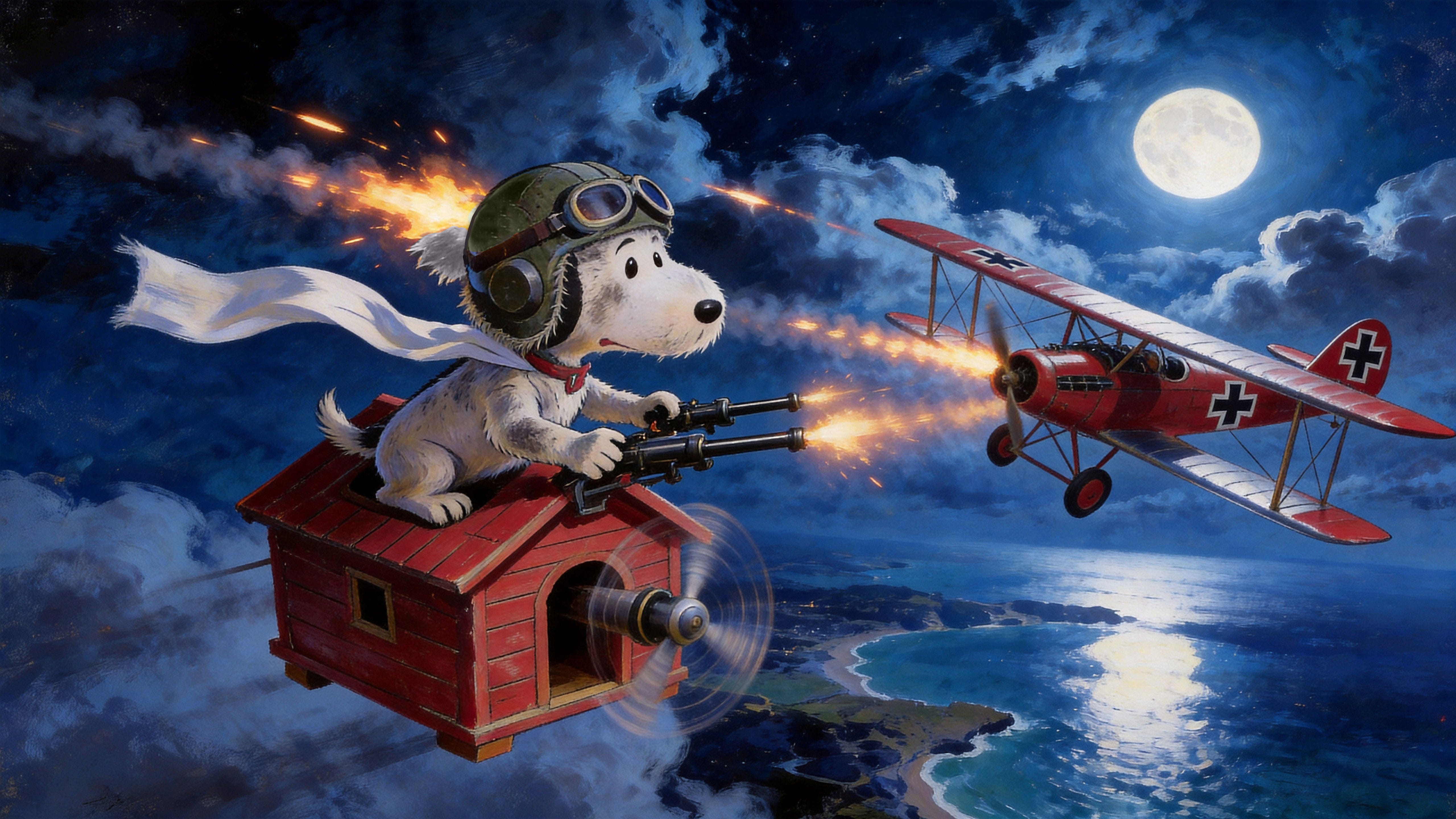
That record didn’t survive. But the pattern did.
The tape keeps printing. It always does.
Until it doesn’t.
If you want to support my writing so I can do more of it,
please consider buying me a coffee and subscribing!
You are a gifted story-teller, most definitely. I can relate to lost stories. I have my own litter floating somewhere in the vastness. Often, I fancy those as mere rough drafts that will mature into refined works.
Your storytelling and your images are captivating!